A chatbot for technical documentation: what it actually has to do
A chatbot on your own technical documentation sounds straightforward. In practice its usefulness is decided at four points, and generic chatbots fail at all of them.
A chatbot for technical documentation has to do more than answer fluently. It has to read tables, drawings and standards, know which revision applies, and cite the file and page behind every statement. Generic chatbots fail on all four counts because they were built for continuous prose, not for technical documents.
What separates a chatbot for technical documentation from ChatGPT?
The question sounds like a feature comparison, but it is a question of construction. A general chatbot formulates answers from what it saw during training. A chatbot on your technical documentation has to do the opposite: answer exclusively from your documents and claim nothing beyond them.
Almost everything else follows from that. It has to open up the documents, find the relevant passage, tie the answer to it, and disclose where the answer came from. The fluent wording is the easy part.
Why do generic chatbots fail on technical documents?
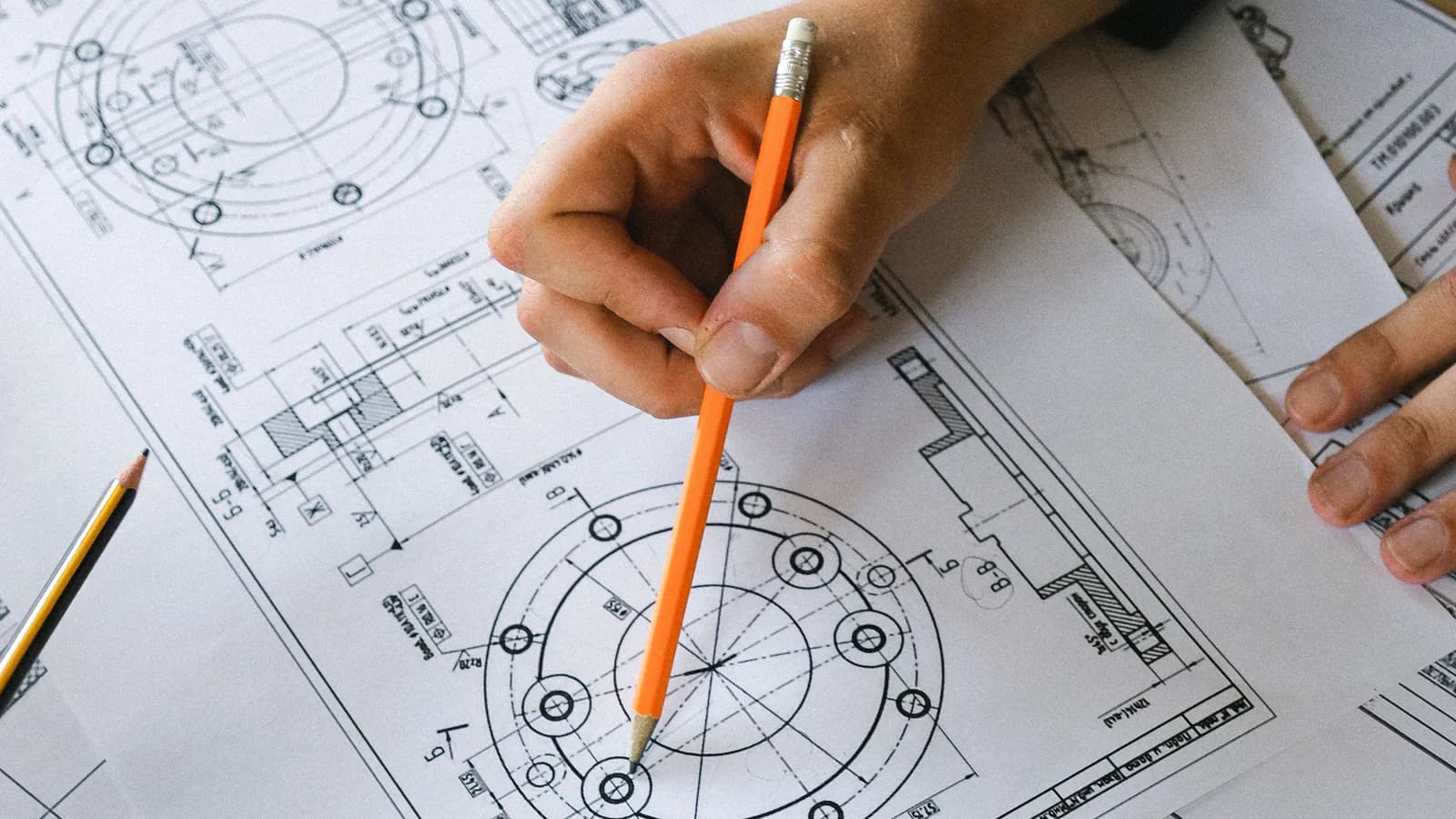
Because technical documents are barely made of continuous text. In a bill of materials the information sits in the pairing of row and column. In a drawing it sits in dimensions, sections, symbols and the title block. In a test report it sits in a table of limit values.
A system that pulls only the text stream from a file gets fragments without context. The answer still sounds confident, because language models build fluent sentences out of fragments too. That is the dangerous part: the error is not visible in the answer.
How image content in engineering can be evaluated is covered in the article on multimodal AI in engineering design.
How does a chatbot handle revisions?
Technical documentation is never finished, it is revised. In a grown archive several versions of the same document therefore sit side by side, and the superseded one is not always marked as such.
A chatbot cannot decide this question on its own. What it can do is make it visible: if every answer names the file it came from, the user recognises the revision immediately. Without that reference it stays open whether the current or the old version just answered, and in engineering that difference decides more than convenience.
What happens with questions the documentation does not answer?
The most important sentence such a system can produce is: I cannot find anything on that. Anyone who reads this as a weakness underestimates what the alternative costs. In an engineering context an invented answer is not neutral. It becomes the basis for a decision nobody questions afterwards, because it looked answered.
A chatbot on technical documentation therefore has to know its limit and name it. That is not a comfort feature, it is the precondition for anyone trusting it at all.
How do you recognise a usable chatbot for technical documentation?
Four questions are enough for a first assessment:
- Does it cite every statement? Not with a document list at the end, but with file and page for the individual statement, openable in one click.
- Does it read more than text? Tables, drawings and scanned documents are the normal case, not the exception.
- Does it say when it finds nothing? You can test this in two minutes by asking something that is demonstrably not documented.
- Where is the data processed? Engineering documents are the company's capital. Whoever uploads them should know where they go and what happens to them afterwards. There is a separate article on ChatGPT and internal documents.
What does this mean in practice?
The decision is not made at the language model. It is made by how well a system opens up the existing documents and how verifiable its answers are. A chatbot that has something to say about everything is worth less in engineering than one that has something to say about less and can prove it.
Why the source reference is the decisive point is covered in detail in the article on AI for technical documentation that cites its sources. What the path from question to evidenced answer looks like technically is shown on the How it works page.
FAQ
Can't I just upload my documentation to ChatGPT?
Technically yes, but it rarely solves the problem. A general chatbot only knows your documents as far as they sit in the current context, extracts mostly continuous text from PDFs, and gives no dependable reference. On top of that comes the question of where the data is processed.
Why do chatbots struggle with tables and drawings?
Both carry their information in the arrangement, not in the sentence structure. A table loses the link between column and value when it is reduced to plain text, and a drawing consists almost entirely of dimensions, symbols and a title block. A system that only extracts text sees almost none of it.
How does a chatbot handle outdated documents?
It does not, unless someone tells it which revision applies. That is exactly why the source reference matters: if the answer names the file, the user sees immediately whether it came from the current revision or a superseded one.
What should happen when the documentation does not answer a question?
The chatbot should say so. In an engineering context an invented, plausible-sounding answer is worse than none, because it is not recognisable as a gap and gets used anyway.
Standards search in mechanical engineering: the 2026 guide
Design engineers lose hours searching standards content. Where teams search today, what it really costs, and how AI speeds up standards search.

On-Prem or EU Cloud for AI on Engineering Data
On-premise is treated as the safe option. What it mainly does is move the responsibility. What the decision actually hangs on, and which requirement genuinely forces on-premise.
Searching Standards With AI: Why the Citation Decides Whether the Answer Is Usable
An AI answer about a standard without a file and page reference is not merely inconvenient in engineering. It is unusable. Why that is, and how to recognise a system that holds up.
Less searching.
More engineering.
In a 30-minute demo, we show KoAssist working with your own documents and discuss setup, integrations and pricing for your team size.