3 Questions Every New Engineer Asks. And No One Can Answer Quickly.
New engineers ask the same three questions every day. The knowledge exists but cannot be retrieved. How KoAssist solves the onboarding problem.
New engineers ask the same three questions every day: Why was it decided this way? Which standard applies? Has anyone built this before? The knowledge exists but is scattered across project folders and people's heads. KoAssist searches existing documents and standards and delivers traceable answers with source references in seconds, without the need for a new data repository.
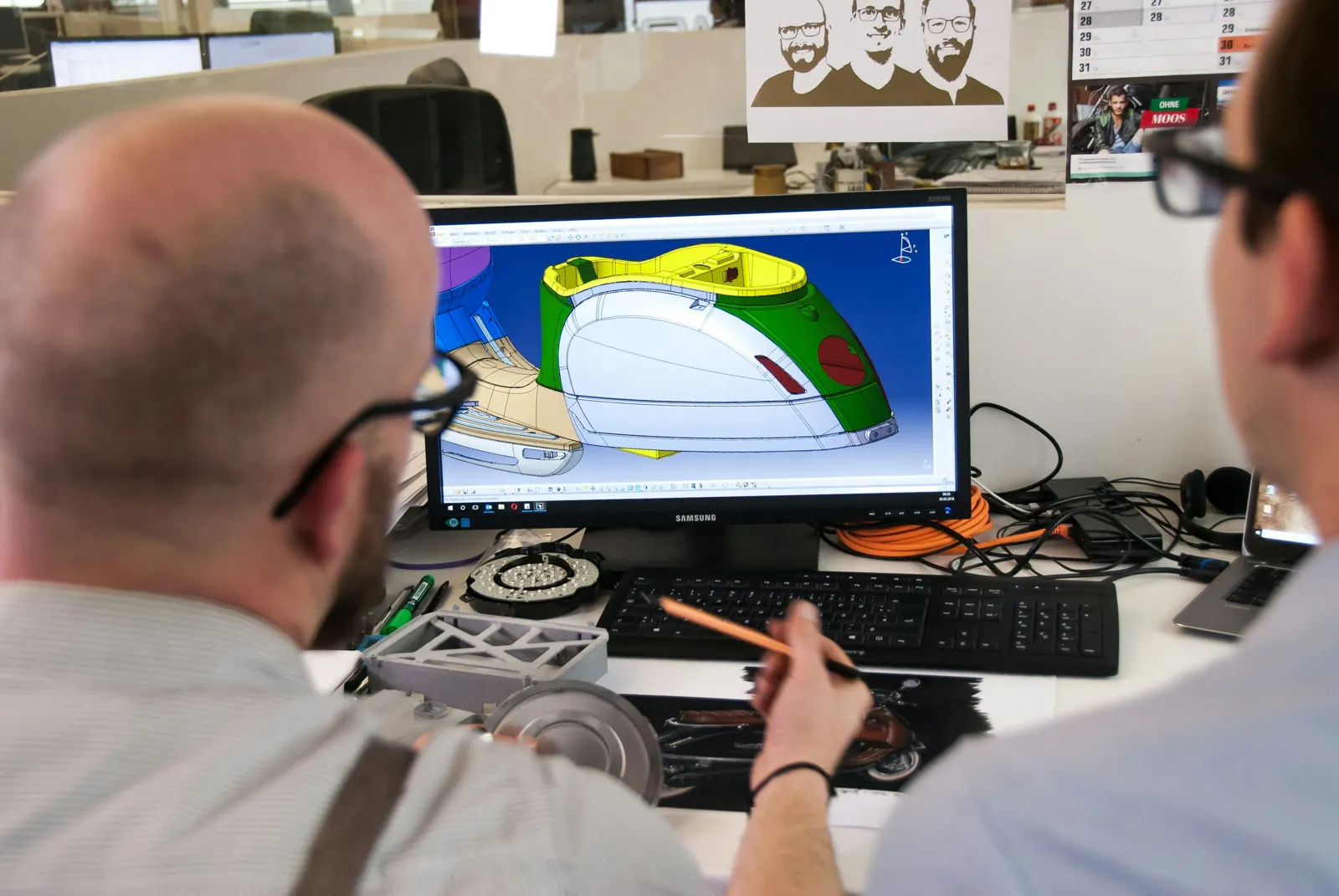
A new engineer joins the team. Day one. Motivation high, knowledge low. And then come the questions.
Why was it decided this way back then? Which standard actually applies here? Has anyone built this before?
Three questions. Every day. From every new team member. And the answers? They sit somewhere in project folders, in the heads of experienced colleagues, or in SharePoint structures no one has touched since 2017.
The problem is not a lack of knowledge. The problem is that no one finds it quickly enough.
Why is onboarding in engineering so slow?
In hardly any department is experiential knowledge as valuable as in engineering. Every decision builds on previous projects. Every tolerance, every material choice, every reference to a standard has a history.
New employees know this. That is why they ask. But the answers cost time. Not their own, but that of the experienced colleagues who are actually meant to be working on ongoing projects.
How big this search problem is, a survey by the strategy portal Cadenas shows: almost half of engineers spend at least one hour every day just searching for component and project information. For new employees who do not yet know the existing material at all, it is considerably more.
Every question from a new engineer costs an average of 15 to 30 minutes of a senior colleague. At three questions per day, that is over 300 lost hours per year. Per new employee.
Most companies accept this as a given. Onboarding just takes time. Six months, sometimes twelve, until someone is really productive. But does it have to be that way?
Why do wikis and manuals not work?
Everyone knows the usual approaches. Set up a wiki. Maintain a folder structure. Write a manual.
The problem: these systems only work if someone maintains them. And if the new employee knows where to search. Both rarely happen in practice.
Wikis go out of date after three months. Folder structures grow uncontrolled. And no one reads the manual, because it does not answer the specific question about the current project.
What is missing is not a better repository. What is missing is a system that understands questions and delivers fitting answers from existing documents.
Which three questions does every new engineer ask?
"Why was it decided this way back then?"
Behind every engineering decision sits a context. Perhaps a customer specification. Perhaps a manufacturing restriction or a supplier failure. This context is rarely documented. It lives in emails, meeting notes and the memory of individual people.
When these people leave the company, the knowledge disappears. Irretrievably. What remains is a CAD model without explanation.
"Which standard actually applies here?"
DIN, ISO, EN. The body of standards in mechanical engineering is vast. New engineers often do not even know which standard might be relevant. Let alone what the current version says.
The search for the right standard costs not minutes but frequently hours. And if the wrong standard is applied in the end, it costs considerably more.
"Has anyone built this before?"
The most valuable resource in an engineering department is completed projects. Every solved problem, every proven solution saves time and errors the next time around. But only if you know about it.
In reality, new engineers often start from scratch because they have no access to relevant predecessor projects. Not because the data is missing. But because it cannot be found.
How does KoAssist answer these questions?
KoAssist searches existing project documentation, standards and internal knowledge bases. In seconds an answer comes. With a source reference.
No new system that has to be maintained. No laborious data migration. KoAssist works on the documents that are already there. PDFs, technical drawings, data sheets, internal standards.
The decisive point: every answer is traceable. The engineer sees where the information comes from and can decide for themselves whether to trust it. No black box, no hallucinations without context.
| Wiki, folders, manual | KoAssist | |
|---|---|---|
| Maintenance effort | High, goes out of date fast | None, works on the existing material |
| Findability | Depends on search knowledge | One question is enough |
| Source reference | Manual | Automatic and traceable |
| Time to answer | Minutes to hours | Seconds |
The fastest way to build new knowledge is no longer to read more. It is to ask better.
What does this mean for engineering managers?
The math is simple. If new employees become productive three months earlier, that saves not only ramp-up costs. It relieves experienced colleagues who no longer have to serve as a walking wiki.
At the same time, the risk of knowledge being lost decreases. KoAssist makes implicit knowledge searchable. What previously only the colleague with 20 years of experience knew is now available to the entire team.
For companies facing a skills shortage, this is not a nice-to-have. It is the basis for new employees being able to work efficiently at all.
Conclusion
Three questions. Every day. From every new engineer. The knowledge for the answers exists in every company. It just cannot be retrieved.
KoAssist changes that. Not by inventing new knowledge, but by making existing knowledge accessible. Fast, traceable, with a source reference.
Onboarding in engineering does not have to take six months. It only needs a system that answers questions as well as the most experienced colleague on the team.
Onboarding is one of many use cases. For the overview, see our topic hub AI in Engineering Design.
FAQ
How long does onboarding of new engineers typically take?
In most companies it takes six to twelve months until a new engineer is fully productive. The main reason is the lack of access to experiential knowledge from past projects. With an AI-supported knowledge management system like KoAssist, this ramp-up time can be significantly shortened.
Why do wikis and manuals not work in engineering?
Wikis and manuals fail in practice for two reasons: they have to be actively maintained, and the new employee has to know where to search. In engineering, projects, standards and specifications change constantly, so static documentation quickly becomes outdated. A system like KoAssist works directly on the existing documents and delivers context-specific answers.
What is KoAssist and how does it support knowledge management?
KoAssist is an AI-supported engineering assistant. It searches existing project documentation, standards, data sheets and internal knowledge bases and delivers traceable answers with source references in seconds. A new data repository is not needed, because KoAssist works on the documents that are already there.
How much time do experienced engineers lose to questions from new employees?
Every question from a new engineer costs an experienced colleague an average of 15 to 30 minutes. At three questions per day, that adds up to over 300 lost hours per year and per new employee. This time is missing on ongoing projects and delays the entire department.
Can KoAssist also search DIN and ISO standards?
Yes, KoAssist can search standards and guidelines such as DIN, ISO and EN and suggest the relevant standard for the engineer's specific use case. Every answer contains a source reference so that the engineer can verify the information themselves.
What happens to experiential knowledge when long-serving employees leave the company?
Without a structured knowledge management system, implicit knowledge is lost irretrievably when experienced employees leave the company. KoAssist makes this knowledge searchable and accessible by indexing existing documentation, emails and project files and making them available to the entire team.

Standards search in mechanical engineering: the 2026 guide
Design engineers lose hours searching standards content. Where teams search today, what it really costs, and how AI speeds up standards search.

On-Prem or EU Cloud for AI on Engineering Data
On-premise is treated as the safe option. What it mainly does is move the responsibility. What the decision actually hangs on, and which requirement genuinely forces on-premise.
Searching Standards With AI: Why the Citation Decides Whether the Answer Is Usable
An AI answer about a standard without a file and page reference is not merely inconvenient in engineering. It is unusable. Why that is, and how to recognise a system that holds up.
Less searching.
More engineering.
In a 30-minute demo, we show KoAssist working with your own documents and discuss setup, integrations and pricing for your team size.