The Biggest AI Advantage in Mechanical Engineering Is Already on Your Servers
Mechanical engineering companies in the DACH region sit on a data treasure the rest of the world does not have. Why almost no one uses it, and how AI changes that.
The biggest AI advantage in DACH mechanical engineering lies not in new models but in the existing data treasure: decades of documented projects, standards, wikis and machine data. AI makes this knowledge retrievable in seconds, with source references. Because this data is company-specific, it creates a competitive advantage that no provider of a generic model can replicate.
There is a debate about whether Europe can keep up with the USA and China in the AI race. Too little capital, too little compute, too little appetite for risk.
This debate overlooks something decisive.
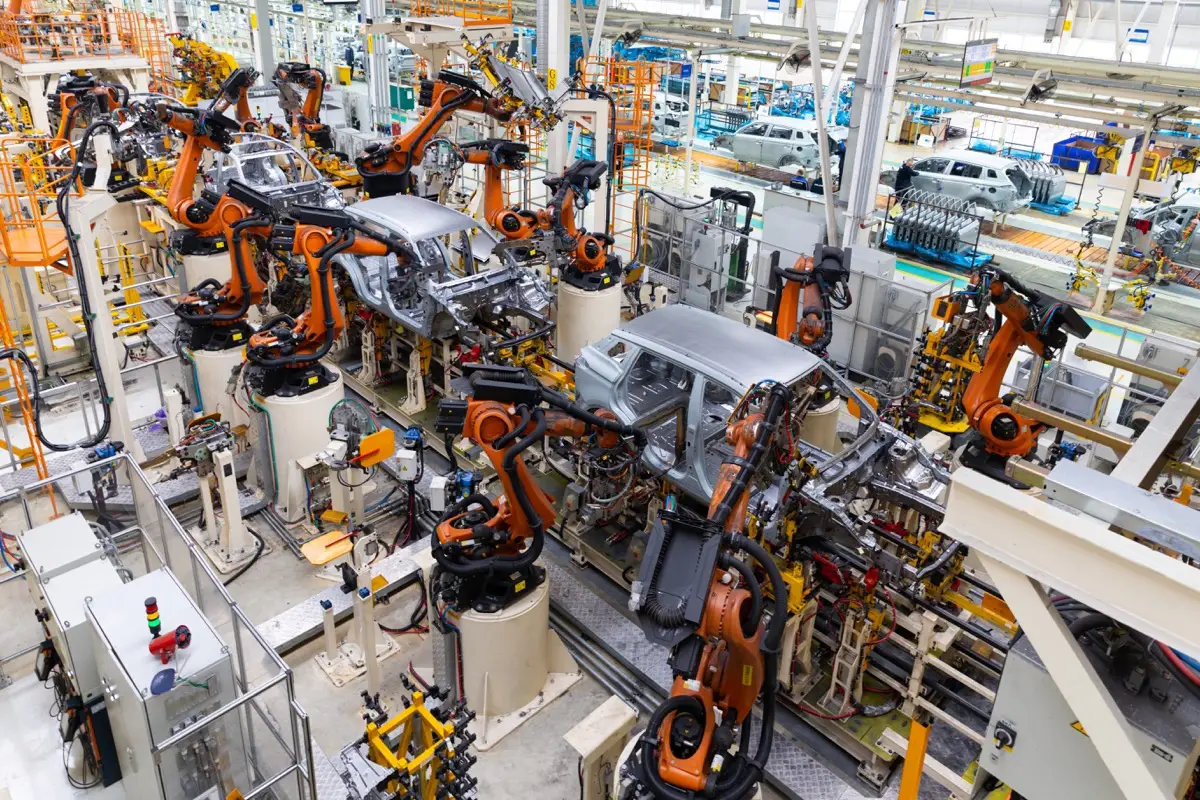
Mechanical engineering companies in the DACH region sit on a data treasure that no startup in Silicon Valley and no factory in Shenzhen can simply replicate: decades of documented, structured, deep process knowledge. Engineering drawings from the 1990s. Project documentation that records every mistake and every solution. Company wikis that preserve the knowledge of engineers who retired long ago. Machine data that has been running quietly for years.
The problem: almost no one really uses this treasure.
Why is DACH mechanical engineering structurally at an advantage with AI?
German, Austrian and Swiss companies document. It is part of the culture, part of the processes, part of the quality standard. ISO certifications demand it, customer requirements demand it, the engineers' own self-image demands it.
In other regions of the world it looks different. Processes exist, but they live in employees' heads, not on the server. Know-how leaves when employees leave the company. Documentation is the exception, not the standard.
| Aspect | DACH mechanical engineering | Other regions |
|---|---|---|
| Documentation culture | Standard, ISO-driven | Rather the exception |
| Where the knowledge sits | Structured on the server | In employees' heads |
| When staff change | Knowledge stays documented | Know-how leaves |
| AI starting position | Usable data treasure present | Data base has to be built first |
DACH mechanical engineering has built up a data treasure over decades that the rest of the world does not have. The advantage is already there. It is simply not being used.
What is missing is not more data. What is missing is a system that makes this knowledge accessible, connects it and makes it usable. In real time, for every employee who needs it.
Which data lies dormant in mechanical engineering companies?
Talk to engineering managers and production heads and the same thing always comes up: "We have the knowledge. We just cannot get at it."
In concrete terms, that means:
Project documentation. Every completed project is a body of experience. Which engineering decisions were made? Where were there problems? Which standards were relevant? Which suppliers delivered, which did not? This information exists, in PDFs, in SharePoint folders, in email threads. But on the next similar project the team starts over, because no one can access the old knowledge efficiently.
Company wikis and best practices. Many companies have built up internal knowledge bases over the years. The problem: they have grown without structure, no one knows exactly what is in them, and search returns either nothing or too much. The result: no one uses them anymore.
Standards, guidelines, specifications. DIN, ISO, EN, internal specifications, customer requirements. An experienced engineer knows the relevant standards for their field. But what happens at the edges? On new projects? With employees who do not yet have ten years of experience? The research costs time, and even experienced engineers sometimes overlook relevant specifications.
Sensor data from production. This may be where the biggest untapped treasure lies. Industry 4.0 initiatives have ensured in recent years that machines deliver data continuously: temperatures, pressures, run times, anomalies. This data runs into databases and is barely used. Predictive maintenance remains a buzzword, because no one has the capacity to evaluate the volume of data meaningfully.
What can AI concretely do with this data?
AI does not change the process here. It finally makes the process usable.
In concrete terms: an AI system trained on the knowledge base of a mechanical engineering company can answer a question like "Which problems did we have with the last hydraulic pump design for customers in the food sector, and which standards were relevant?" in seconds. With a source reference, a page reference, a specific document.
The same applies to sensor data: a model that knows the historical operating data of a machine recognizes patterns that point to an impending failure. Not because it happens to find anomalies, but because it understands how this specific machine behaves under normal conditions.
AI does not bring new knowledge into the company. It makes usable the knowledge that is already there.
This is the decisive difference from AI hype projects built on generic models: the competitive advantage does not come from the model itself, but from the company-specific data behind it. And no competitor has that.
Where is the AI lever in mechanical engineering biggest?
Not every company has to start with sensor data and predictive maintenance. The biggest quick wins often arise where knowledge is used most inefficiently today:
For engineering teams. Searching standards, project history and internal specifications at the push of a button instead of hours of research. A time saving of 3 to 6 hours per week per engineer is realistic.
For new employees. Onboarding in mechanical engineering often takes months, because implicit knowledge is hard to transfer. An AI system that makes this knowledge explicit significantly shortens the time to full productivity.
For engineering on customer inquiries. How did we solve similar requirements before? Which components did we use? What worked, what did not? Answers in minutes instead of days.
Why is now the right time?
The models are good enough. The infrastructure is available. The GDPR requirements can be met with EU cloud solutions and on-premise deployments.
What has been missing so far was the bridge between the knowledge that sits inside companies and a system that makes it accessible. Building this bridge is the task.
Companies that start now build a lead that is hard to catch up with. Not because they adopt new models faster than others, but because their company-specific knowledge grows in the system while competitors still work with generic tools.
The data treasure is already there. The only question is who raises it first.
How to actually raise this data treasure is mapped out in our topic hub AI in Engineering Design, covering all the use cases.
FAQ
How can I use existing company data for AI in mechanical engineering?
Existing data such as project documentation, standards, engineering drawings and company wikis can be indexed and made searchable by AI systems. This way, employees find relevant knowledge in seconds instead of hours, with a source reference and a specific document pointer.
Which data in mechanical engineering is especially valuable for AI?
Especially valuable are project documentation with engineering decisions and fault resolutions, standards and guidelines (DIN, ISO, EN), internal best practices, and sensor data from production. This company-specific data creates a competitive advantage that no competitor can replicate.
What concrete time savings does AI bring in mechanical engineering?
For engineering teams, a time saving of 3 to 6 hours per week per engineer is realistic, above all in searching standards, project history and internal specifications. Onboarding of new employees is also significantly shortened, because implicit knowledge becomes explicitly accessible through AI.
How do I prepare data in mechanical engineering for AI?
First, take an inventory of the most important knowledge sources: where does the data sit, in what format and how current is it? Unstructured data spread across different systems is not an obstacle, but it has to be factored in. Data preparation often makes up 40 to 60% of the total effort.
Is AI worth it for mid-sized mechanical engineering companies in the DACH region?
Yes, DACH machine builders even have a structural advantage: through their documentation culture they have a data treasure that companies in other regions do not. The ROI shows above all in time saved on knowledge research, faster onboarding and better use of historical project data.

Standards search in mechanical engineering: the 2026 guide
Design engineers lose hours searching standards content. Where teams search today, what it really costs, and how AI speeds up standards search.

On-Prem or EU Cloud for AI on Engineering Data
On-premise is treated as the safe option. What it mainly does is move the responsibility. What the decision actually hangs on, and which requirement genuinely forces on-premise.
Searching Standards With AI: Why the Citation Decides Whether the Answer Is Usable
An AI answer about a standard without a file and page reference is not merely inconvenient in engineering. It is unusable. Why that is, and how to recognise a system that holds up.
Less searching.
More engineering.
In a 30-minute demo, we show KoAssist working with your own documents and discuss setup, integrations and pricing for your team size.