What happens to project knowledge when a quarter of the workforce in machine building retires?
By 2034 about 296,000 employees in German machine building will retire, while only about 118,000 will follow. What gets lost in the project business, and how to keep the knowledge in the project before the experienced people leave.
 Yanik YeganehfarCo-Founder & COO4 min read
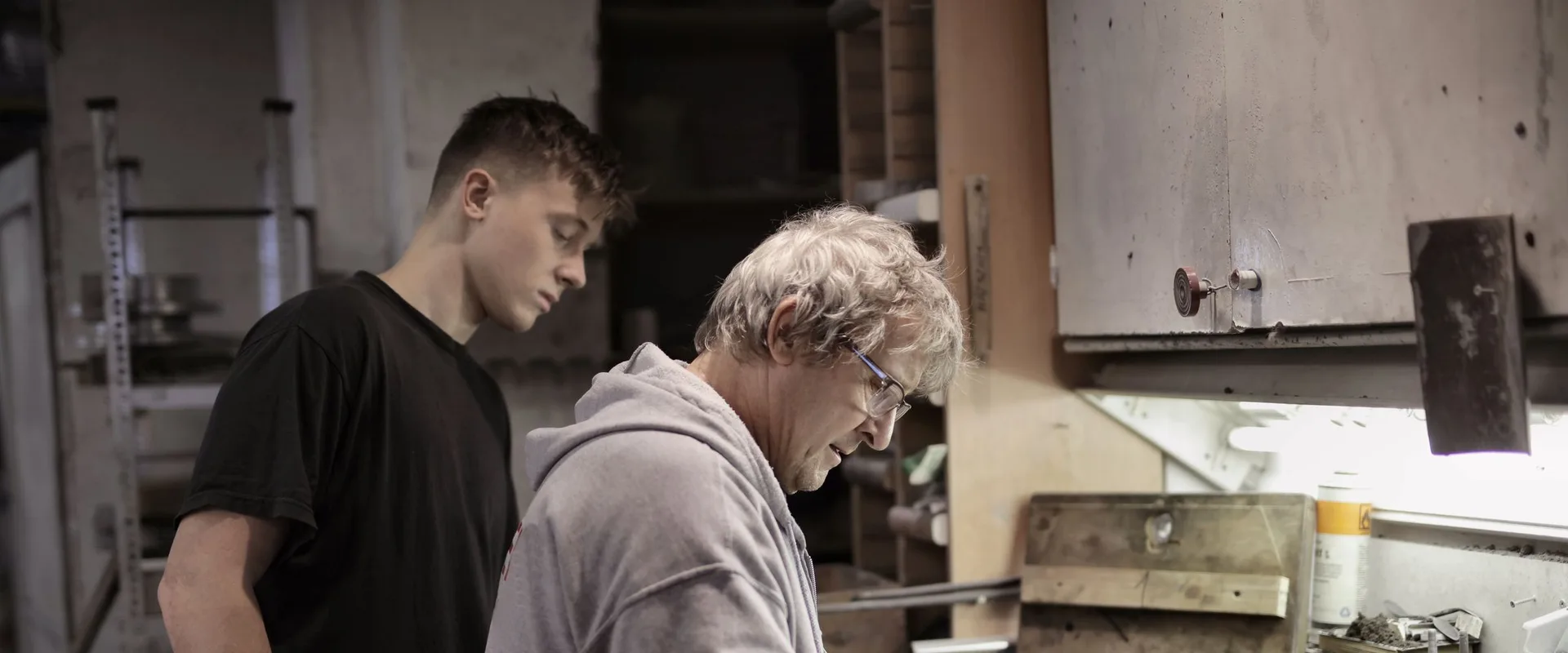
According to IW Köln, about 296,000 employees in German machine building will retire over the next ten years, roughly a quarter, and only about 118,000 will follow. In the project business it is less documentation that gets lost than context: reasons for decisions, commitments to customers, experience from earlier plants. This knowledge can be kept if it is recorded during the project, where the project lives, with a source for every item, and not only at handover.
Contents
A project manager with thirty years in plant engineering retires in spring. His running projects are reassigned, the folders are tidy, the schedule is current. Six months later a customer asks why the safety enclosure was built higher than the specification required. The answer was never in a document. It was a conversation on site.
Cases like this are becoming more common, for a simple reason. More experienced people are leaving than young people are joining.
How large is the gap in machine building?
A study by IW Köln for the Impuls-Stiftung expects a significant gap in German machine building. Over the next ten years about 296,000 employees will retire, roughly a quarter. Only about 118,000 will follow. By 2034 that leaves a potential gap of about 178,000 skilled workers (IW Köln, November 2024).
The market for engineers is tight right now too, despite the weak economy. According to the VDI/IW engineering monitor, there were 174 open positions for every 100 unemployed in mechanical and automotive engineering in Q3 2026, and 161 across all engineering professions (VDI/IW Ingenieurmonitor 2026/III).
The figures say nothing about how well a single company is prepared. They do say that handing over knowledge will no longer be the exception in the coming years, but the norm.
What gets lost in the project business
In machine and plant building most knowledge is tied to projects. A specification, an order, a year of engineering, assembly and acceptance. The documents outlive the project, the context in between often does not.
Typically lost:
- Reasons for decisions. Why were the controls built to IP65 when IP54 was required? The answer sits in an email or a conversation, not in the drawing.
- Commitments to the customer. What was promised on the phone or in a meeting rarely makes it into the minutes.
- Experience from earlier plants. Which solution worked on the last similar project, and which did not? Usually only those who were there know.
- Who knows what. Every company has the person you ask about a topic. When they leave, often nobody knows whom to ask instead.
On top of that is where the project status lives today: in Excel lists, OneNote pages and inboxes. More on that in the article on project status in Excel, OneNote and email.
Four steps to keep project knowledge in the project
1. Record it while the project runs
Most companies try to secure knowledge at handover or in a lessons-learned session at the end of the project. By then much is already forgotten. It is more effective to record decisions and changes as they happen, where the project lives. The article on lessons learned in machine building shows how to do that without extra effort.
2. Every item with its source
A project status without sources is a claim. If every item shows which email, which minutes or which page of the specification it comes from, someone new can check it without calling their predecessor.
3. Add to handovers instead of rebuilding them
If the status is kept up continuously, a handover only has to add what is not in the documents: the customer's quirks, experience from site. A checklist is in the article on project handover in plant engineering.
4. Make earlier projects findable
The most valuable knowledge sits in completed projects. It only helps if someone finds it. That includes being able to ask earlier projects in full sentences and getting the answer back with file and page.
Where KoAssist helps
KoAssist is an AI agent for projects in machine and plant building. KoAssist works with the documents you release, fills a project profile from the specification, emails and minutes, every item with its source, and puts changes up for approval. Whoever knows something new tells the project, and everyone on the team sees the same status. That way the knowledge stays in the project, even when people change.
What that looks like day to day is on the page How KoAssist works. More on the product is under project memory.

Frequently asked questions
More from the blog
Back to overview- 03 November 2026Article7 min
Why does project status in Excel, OneNote and email take so long to pull together?
Open-points list in Excel, meeting notes in OneNote, decisions buried in email threads. Why the project status in plant engineering has to be rebuilt every time, and how it can assemble itself from the sources.
7 min - 26 October 2026Article7 min
How to keep the internal and customer versions of a status report apart
What belongs in a status report for the customer, what never does, and how to produce both versions from the same project status so internal remarks never reach the customer.
7 min - 18 October 2026Article7 min
How to stop project decisions made by email from getting lost
In plant engineering, date shifts, customer change requests and approvals often arrive by email. Why they stay stuck in inboxes and how to get them reliably into the project.
7 min