Why the Citation Decides Whether AI Answers on Standards Are Usable.
An AI answer about a standard without a file and page reference is not merely inconvenient in engineering. It is unusable. Why that is, and how to recognise a system that holds up.
 Andreas SchaubmaierCo-Founder & CEO5 min read
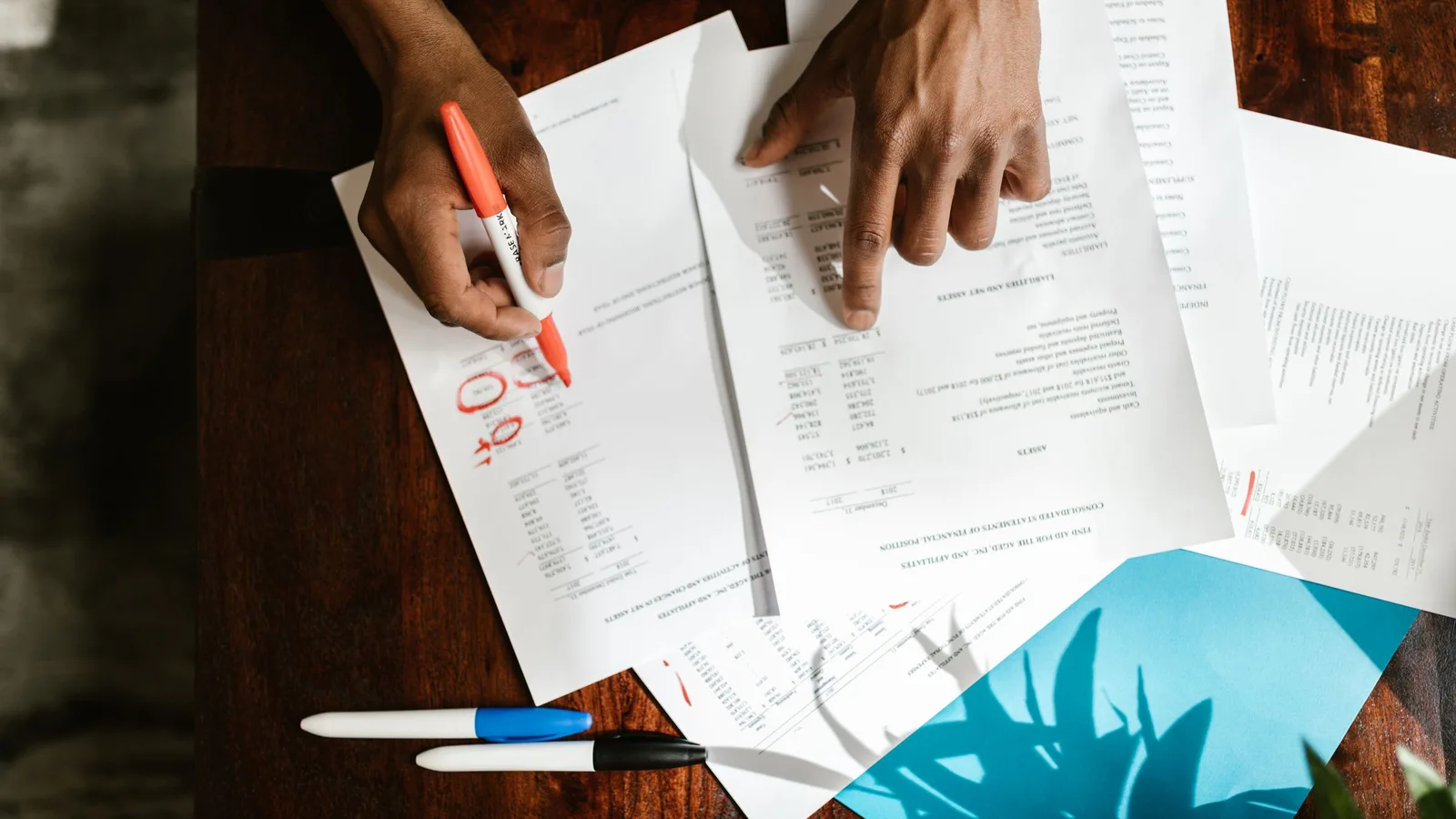
Standards are versioned, get withdrawn and cross-reference each other. An AI answer to a question about a standard is therefore only usable if it cites the document, the edition and the page. Without that reference you can neither check whether the cited edition still applies, nor use the statement in a risk assessment or conformity assessment.
Contents
Why questions about standards are a special case
Most questions in day-to-day engineering tolerate an approximate answer. A question about a standard does not. For an overview of where design engineers search for standards today and what that costs, see our guide to standards search in mechanical engineering. This article goes deeper into the point where usable tools part ways with unusable ones: the citation.
Anyone who needs to know which requirements apply to a guard does not need a plausible summary. They need the passage: document, edition, clause. Because what counts in the end is not the answer but the evidence that it comes from the edition in force.
That is not a formality. In conformity assessment the burden of proof sits with the manufacturer. A statement whose origin nobody can reconstruct is worthless in the technical file.
What makes standards technically hard to search
Four properties that together create the problem:
They are versioned. There is no such thing as DIN EN ISO 12100; there is an edition of it. Cite the wrong edition and you have cited wrongly, even if the sentence itself is correct.
They get withdrawn and replaced. Machinery Directive 2006/42/EC is superseded from January 2027 by the Machinery Regulation (EU) 2023/1230. Anyone looking something up today has to know which legal status applies to their product.
They cross-reference each other. A question about functional safety leads from the risk assessment under DIN EN ISO 12100 to the evaluation of control system parts under DIN EN ISO 13849. The answer rarely sits in a single document.
They are licensed. Standards are copyrighted. Where they are stored and who processes them is not merely a question of convenience.
The four properties and what they mean for a search system
| Property | Consequence for search |
|---|---|
| Versioned | The edition has to be part of the answer, not just the number |
| Get replaced | The system must show which document it is reading from, not answer from memory |
| Cross-reference | An answer spans several documents; every step needs its own citation |
| Licensed | The documents must not leave the controlled environment |
Where full-text search runs into its limit
Full-text search in a PDF reader finds occurrences. That is enough as long as you know the term something is filed under.
With standards you often do not. The question is "may the operator intervene during operation"; what has to be found is a clause about interlocking guards. Between question and passage sits technical vocabulary, and that is exactly what full-text search excludes.
Then there is the reference chain. Anyone who has to assemble an answer from three documents does that three times over with full-text search and afterwards cannot be sure they did not miss a fourth.
What an AI assistant changes and what it does not
An assistant working on your own body of standards shifts the effort: from "where does it say that" to "is that correct". That is the real gain. Not the answer itself, but the shortened path to the referenced passage.
What it does not change: the professional assessment. Whether a requirement applies in a given case, which exemption takes effect, how it is weighted in the risk assessment: that remains an engineering decision with responsibility behind it. A system that blurs this distinction is more dangerous than useful.
This is why the citation is not an add-on feature. It is what makes the assessment possible in the first place.
How to recognise a system that holds up
Four checks that can be settled in a ten-minute demo:
- Does every statement point to a document and a page? Not "according to DIN EN ISO 13849", but the specific file and the specific page, reachable in one click.
- Is the edition visible? A standard number without a year is half a citation.
- Does the system say when it finds nothing? An assistant that composes an answer to every question has no awareness of its limits. "I cannot find anything on that in the stored documents" is the more valuable answer.
- Where do the documents sit? With licensed standards that is a legal question, not a preference. EU hosting is the default here, not a nice-to-have.
Point 3 is underrated. A system that would rather sound plausible than admit the information is missing produces exactly the error you can least afford in standards research: a statement nobody questions any more, because it was phrased so confidently.
What this looks like in practice
KoAssist answers questions from the documents a company already holds: standards, directives, internal specifications, project records. It supplies the file and the page with every statement. The chain of evidence is not a separate view; it is part of the answer.
What that means day to day shows in adjacent tasks: the same mechanism carries looking things up in existing technical documentation and onboarding new design engineers, where the same questions come up again and again.
What KoAssist does not do: produce standards, assess conformity, or take on responsibility. It shortens the path to the passage. The judgement stays with the engineer, and that is the right division.
What the citation chain looks like in the product is shown on the knowledge assistant page.

Frequently asked questions
More from the blog
Back to overview- 05 November 2026Article4 min
What happens to project knowledge when a quarter of the workforce in machine building retires?
By 2034 about 296,000 employees in German machine building will retire, while only about 118,000 will follow. What gets lost in the project business, and how to keep the knowledge in the project before the experienced people leave.
4 min - 03 November 2026Article7 min
Why does project status in Excel, OneNote and email take so long to pull together?
Open-points list in Excel, meeting notes in OneNote, decisions buried in email threads. Why the project status in plant engineering has to be rebuilt every time, and how it can assemble itself from the sources.
7 min - 26 October 2026Article7 min
How to keep the internal and customer versions of a status report apart
What belongs in a status report for the customer, what never does, and how to produce both versions from the same project status so internal remarks never reach the customer.
7 min